YOUR COMPASS FOR GROWTH
Navigate Your True Purpose
Align your career and life mission with a proven, structured approach to self-discovery and professional mastery.
Trusted by leaders worldwide
BEHAVIORAL DYNAMICS
The DISC Synergy Matrix
Understand your unique behavioral style and discover how to align with others for maximum impact.
D
Dominance
Direct, results-oriented, and decisive. Thrives on challenges and bottom-line results.
Synergy: Pairs well with 'C' for detail execution and 'I' for visionary action.
I
Influence
Outgoing, enthusiastic, and optimistic. Excels at inspiring others and building relationships.
Synergy: Complements 'S' for team cohesion and 'D' for driving momentum.
S
Steadiness
Even-tempered, accommodating, and patient. Provides reliable support and stability.
Synergy: Balances 'I' with grounded focus and 'C' with collaborative patience.
C
Conscientiousness
Analytical, reserved, and precise. Focuses on quality, accuracy, and expertise.
Synergy: Anchors 'D' with calculated risk and 'S' with structured processes.
THE PURPOSE FLOW
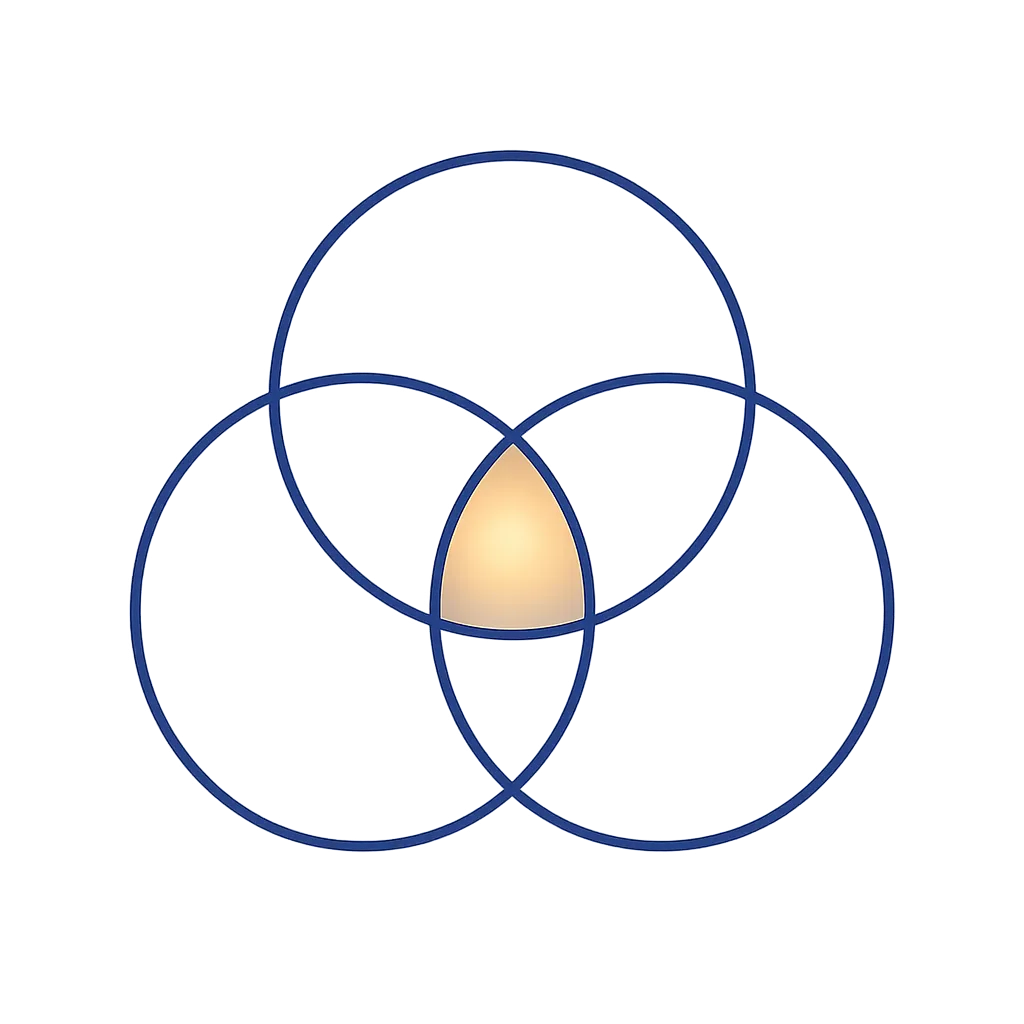
Find Your Center
True alignment is rarely discovered by accident. It is intentionally navigated by mapping the intersection of three vital elements: what you deeply care about, what you are uniquely equipped to do, and what the world actually needs.
- Passion: The wind in your sails.
- Skill: Your navigational expertise.
- Market Need: The destination you are charting.
YOUR JOURNEY
The Upward Path
A guided, sequential voyage from uncovering your baseline strengths to dropping anchor in your true life's work.

PHASE 01
Self-Discovery & The DISC Foundation
Before you set sail, you must plot your coordinates. We begin by charting your unique DISC profile, establishing the absolute baseline of your natural strengths, communication style, and blind spots.
- Identify your core behavioral patterns
- Understand how you naturally interact with the wind and waves of change
- Build the self-awareness necessary to captain your career
PHASE 02
Career Alignment
Catch the right wind. Here, we map your innate skills to the ideal career currents. Stop fighting the tide of your own talents and start moving in the direction of least resistance and highest reward.
- Audit your current professional trajectory
- Align daily habits with long-term vocational goals
- Transform friction into forward momentum


PHASE 03
Purpose Mastery
Reach your destination. This is the final waypoint where passion, skill, and market demand converge in a seamless state of Purpose Flow.
- Operate entirely within your zones of genius
- Experience sustainable, meaningful success
- Leave a wake of positive impact for others to follow
INVEST IN YOUR JOURNEY
Choose Your Vessel
Select the coaching package that best aligns with your goals and required level of guidance.
NAVIGATOR
$57
Essential guidance to set your course and understand your unique behavioral style.
DISC Profile Assessment
Purpose Flow Mapping
Video Debrief Session
Action Plan Setup
RECOMMENDED
CAPTAIN
$197
Advanced charting and dedicated coaching for the serious voyager ready to commit.
Everything in Navigator
Expanded DiSC profile from Wiley DiSC
Strategic Networking Plan
Detailed discussion of how to best work with the other profile type people.
FLEET ADMIRAL
$1,497
The ultimate executive navigation package with elite-level alignment strategy.
Everything in Captain
Quarterly Zoom Coaching with others in your personality style for one year.
Legacy Blueprinting
Priority VIP Access and optional monthly ongoing help at $49/month after first year.
Client Journeys
Stories of Alignment
★★★★★
"The DISC synergy breakdown was the compass I didn't know I needed. Upgrading to the Captain package gave me the exact coordinates to align my career with my true purpose. I've never felt more anchored, confident, and directed in my decisions."

Sarah Jenkins
Captain Tier Voyager
★★★★★
"Seeing my Purpose Flow Venn completely shifted my perspective. It's not just theory; it's a practical navigational tool that I use daily."

Marcus Thorne
Navigator Tier
★★★★★
"Understanding how my high-'D' profile interacts with my team has eliminated so much friction. The clarity is genuinely invaluable."

Elena Rostova
Fleet Admiral Tier
New Success Path
Charting a deliberate course toward career clarity and deep personal alignment.
Navigation
- Home
- Career Path
- Purpose Path
- Shopping Cart
Partner Sites
- www.eagledisciples.com
- www.eaglelistings.com
Connect
[email protected]
Privacy Policy
Terms of Service


© 2026 New Success Path. All rights reserved.